In October, Warsaw once again turned into a proving ground of pianistic discipline.
In October, Warsaw once again turned into a proving ground of pianistic discipline. The nineteenth edition of the International Chopin Competition – the first step in the centenary cycle – assembled what may be the most rigorously trained group of young musicians to ever enter its ranks. These performers came shaped not only by elite institutions, but also by an era where attention itself is a scarce resource and excellence feels like an obligation as much as an achievement.
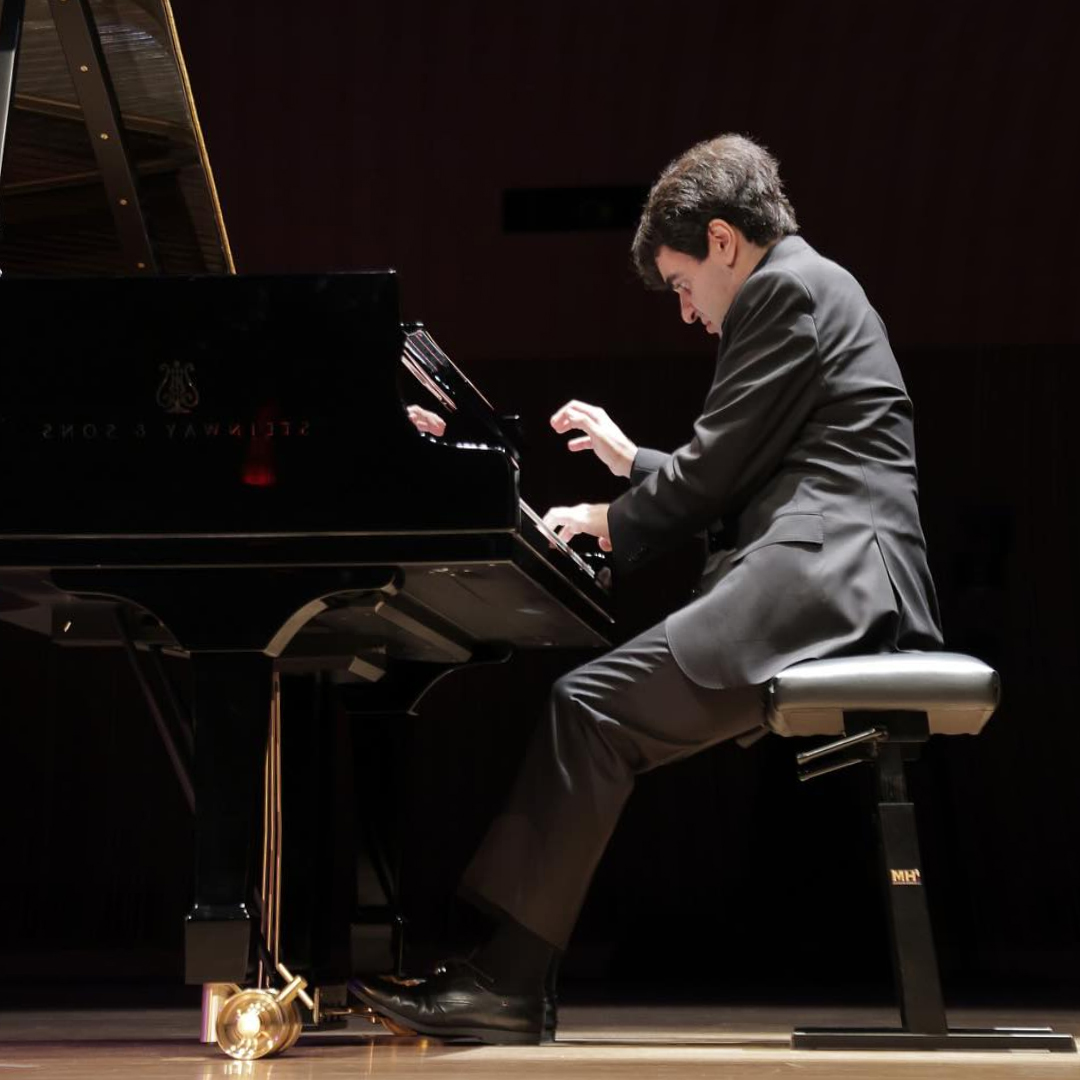
Among the eleven finalists was David Khrikuli, a 24-year-old Georgian pianist who chose Chopin’s F minor Concerto, Op. 21, and the Polonaise-Fantaisie, Op. 61. Although he left the competition without an official prize, his performance became one of the few that reframed the event from a mere contest into a subject of cultural debate.
The Chopin Competition – launched in 1927 – was born from a distinctly modern ambition: to convert artistic judgment into structured evaluation. It belongs to the same century that codified the Olympics and the Nobel Prize, institutions founded on ordering, measuring, and public validation.
Yet music has always resisted such frameworks. Even when adjudication is meticulously systematized, the act of grading sound cannot escape its inherent subjectivity. Every edition of the competition grapples with this contradiction: jurors attempt to quantify an art form that transcends quantification. The finalists, already seasoned competitors, arrived in Warsaw not as students but as polished professionals. What captured attention in Khrikuli’s playing was not his facility – expected at this level – but the quality of his tone: introspective, slightly raw, shaped with the intention to explore rather than to impress. His approach suggested that music arises not from the desire to dominate the score, but from the desire to understand it.
By choosing the F minor Concerto, Khrikuli leaned into Chopin’s more reflective voice. The piece lacks the outward brilliance of the E minor Concerto; its essence lies in subtle contrast, in the shifting balance between melodic lines and harmonic shadows. Here, the pianist’s role is not to project but to disentangle – to illuminate the fragile borders between musical ideas.
The concerto also contains a built-in emotional imbalance. Its oscillation between minor tension and luminous modal turns evokes a psychological landscape closer to late Schubert than to grand Romantic rhetoric. For a performer, the challenge lies in maintaining tonal clarity without sacrificing depth. Khrikuli foregrounded internal pacing rather than external pulse – a choice that can be misinterpreted in competitive settings as insufficient firmness. But within that elastic breathing, Chopin’s grammar gains its most human shape.
Historically, the Chopin Competition has mirrored the shifting aesthetics of its time: romantic spontaneity in the 1930s, structural rigor in the 1970s, and interpretive neutrality in the twenty-first century. Its current tendencies echo a broader cultural logic – an emphasis on coherence, polish, and stylistic predictability.
In such an environment, the notion of “victory” becomes unstable. Competition implies that music’s goal is to reach a verdict; but Chopin’s writing resists linear closure. His works circle back on themselves, suspended between moods, ending not in triumph but in reflection.
Competitions function on two intertwined systems: psychological and economic. Psychologically, they cater to the human desire for hierarchy – for situating oneself within a scale of achievement. Musicians internalize this structure, refining interpretations based on probability rather than instinct. Yet the more a performance is shaped to satisfy expected judgments, the more it risks creative stagnation. Khrikuli’s emphasis on nuance over consensus demonstrates a rare recognition of this tension: true artistic resonance does not respond well to calibration.
Economically, competitions remain gateways to global careers. Awards generate engagements, recordings, and representation. But reaching the final – especially in a centenary edition followed worldwide – carries significant influence on its own. Audience reactions, critical discourse, and digital circulation often reshape careers independently of juries. In this sense, Khrikuli’s “non-prize” becomes a form of cultural presence – proof that contemporary musical value extends beyond medals.
Perhaps the most revealing aspect of this year’s competition is the discussion that followed. The debates surrounding Khrikuli’s absence from the podium reflect a shift in public expectations: from evaluating flawless execution to questioning the very nature of artistic relevance. Studies in aesthetic psychology show that listeners respond most powerfully to subtle unpredictability – to variations in color and timing that convey authenticity. Measured by this criterion, Khrikuli’s playing ranks among the most intellectually stimulating interpretations of the competition, even if it diverges from traditional scoring systems.
Reaching the Chopin final remains a profound achievement. Beyond the awards lies another realm of recognition – the ability to influence how music is thought about. Khrikuli’s playing underscores that artistic significance cannot be distilled to a competitive outcome; phrasing, texture, and interpretive risk are themselves contributions to the wider musical conversation.
In this way, Khrikuli illustrates a broader truth of today’s musical landscape: artistic authority is no longer guaranteed by a medal. Competitions capture only a narrow part of artistic influence. What truly endures is how a musician expands perception, redefines the possibilities of interpretation, and invites listeners into a deeper dialogue.
His presence in Warsaw, ultimately, generated insight – about Chopin, about the psychology of performance, and about the delicate balance between institutional expectation and personal vision. That insight, though intangible, is its own form of success – one that reaches further than any award could.