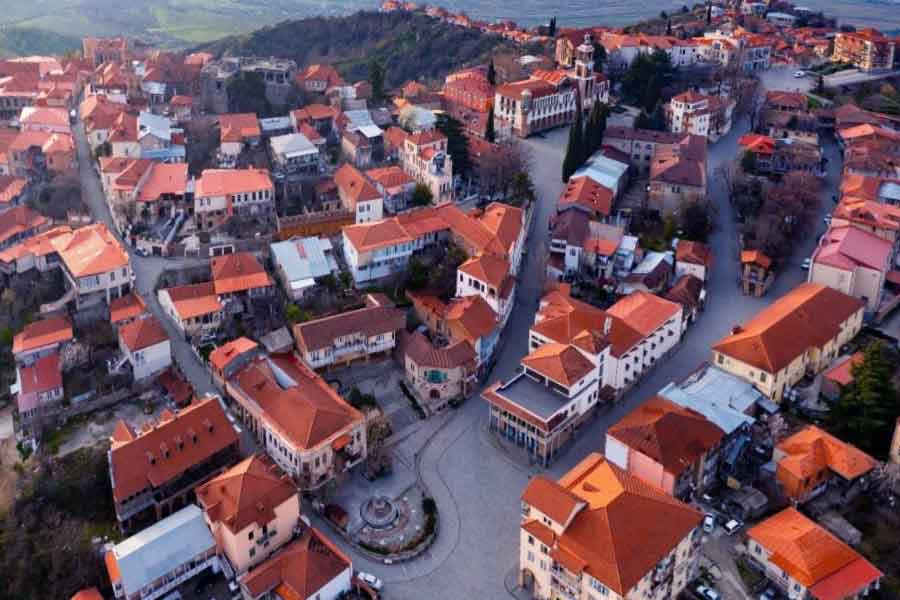
International heritage experts have assessed the proposed concept for a new riverside recreational park in Mtskheta, highlighting the need to balance development with preservation.
Representatives from the UNESCO World Heritage Centre, along with advisory bodies ICOMOS and ICCROM, met with Georgian officials at the Ministry of Infrastructure to examine the project.
The meeting brought together Infrastructure Minister Revaz Sokhadze, deputy ministers, members of the Municipal Development Fund, and architects from Artstudio Project.
At the center of discussions was the planned development along the right bank of the Aragvi River, near the Teatron area, based on a design selected through an architectural competition.
Given the site’s location within the buffer zone of the Historical Monuments of Mtskheta, the project requires careful coordination with heritage institutions and additional approvals.
Future stages will involve consultations with local authorities, the Ministry of Culture, and the National Agency for Cultural Heritage Preservation, alongside ongoing dialogue with UNESCO experts.
Officials emphasized that protecting the authenticity and historical value of the area remains a priority, even as the project seeks to introduce new public infrastructure.
During the session, architects presented key elements of the concept, including spatial planning strategies, environmental considerations, and integration with the existing urban fabric.
The proposal takes into account the morphology of the surrounding landscape, transport and pedestrian connectivity, and the broader historical and social context of the site.
The project envisions a 70-hectare riverside park featuring green spaces, walking and cycling paths, restored architectural elements, and multiple recreational zones.
Designed to serve both residents and visitors, the park aims to create a large public space that connects Mtskheta with nearby Tbilisi while enhancing access to the riverfront.
UNESCO representatives will continue reviewing the project details before issuing final recommendations, ensuring that development aligns with international heritage standards.